

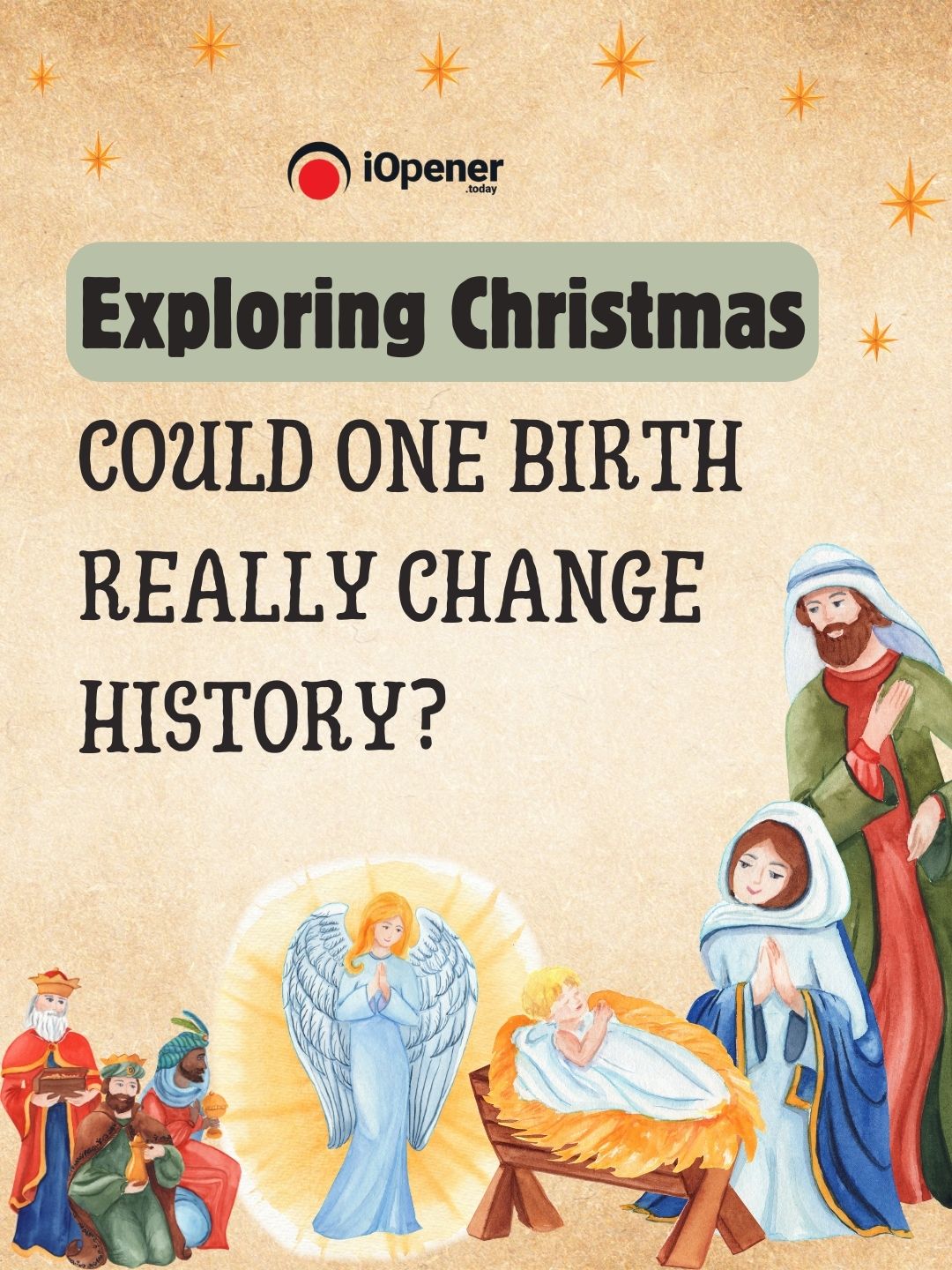
For centuries, many Kings have risen, ruled their kingdoms, and many great thinkers have shaped our past world. Yet none of them could influence and save humanity the way a single, humble birth took place in Bethlehem. No palaces or walls echoed the celebrations, but a manger and the sky recorded the historic moment of the birth of a child who’s going to redefine Hope forever. Christmas is not just a festive memory; it’s a pivotal moment in human history. The true meaning of Christmas goes far beyond lights, gifts, decorations, and festive gatherings.
Two thousand years later, the life of Jesus Christ continues to touch and inspire the hearts of many, transforming lives. Empires could not erase him, Critics could not silence him, and what’s more, Death itself could not stop him. So, could one birth really change history? Christmas boldly declares, YES. When Jesus entered the world, light broke into the darkness, despair turned to hope, emptiness turned to purpose, and humanity discovered that God had stepped into our lives.
At its heart, Christmas is the celebration of God stepping into humanity through the birth of Jesus Christ- reshaping the whole world. When we look into the history of Christmas, it was only in the 4th century, during the era of Constantine the Great, that the church formally recognised a day to honour the birth of Jesus Christ. As Christianity spread across Europe, Christmas absorbed local customs- evergreen decorations, Dinners, lights, gifts, and community gatherings. During the Middle Ages, Christmas evolved into a significant cultural celebration.
Later, cultures and changing societies reshaped the celebration of Christmas, particularly with the introduction of Victorian-era traditions, including Christmas trees, family dinners, and modern gift-giving. But Jesus is not just a historical figure; he is the long-promised Saviour who came to the earth to bring hope, peace, and reconciliation between God and humanity. His birth represents the reality of divine love taking the form of a human. The early division of history into BC and AD, the transformation of moral values, education, science, art, human rights, and the rise of hospitals and charitable institutions, point us toward the undeniable life of Jesus Christ. Centuries of prophecy, expectation, and historical preparation culminated in the incarnation – God entering human history as a real person.
Now, Christmas stands as a historical claim, not as a comforting myth. The birth of Jesus explains a profound reality: history itself was permanently altered. Long before modern Christianity, the world was uniquely prepared for his arrival, and after him, nothing remained the same. Moral frameworks shifted, human dignity was elevated, and civilisations were reshaped. Such a massive and lasting impact shows a cause greater than legend or coincidence.
The true meaning of Christmas is ultimately God’s deliberate entrance into human history, testifying that Jesus was not merely born, but sent. The life of Jesus Christ matters because his coming explains why the world changed and why it still does. If History bears his fingerprints, his identity deserves honest investigation.



 More Than a Date – A Declaration of Who We Chose to Be