

Career Talk Series | Part 4 of 5
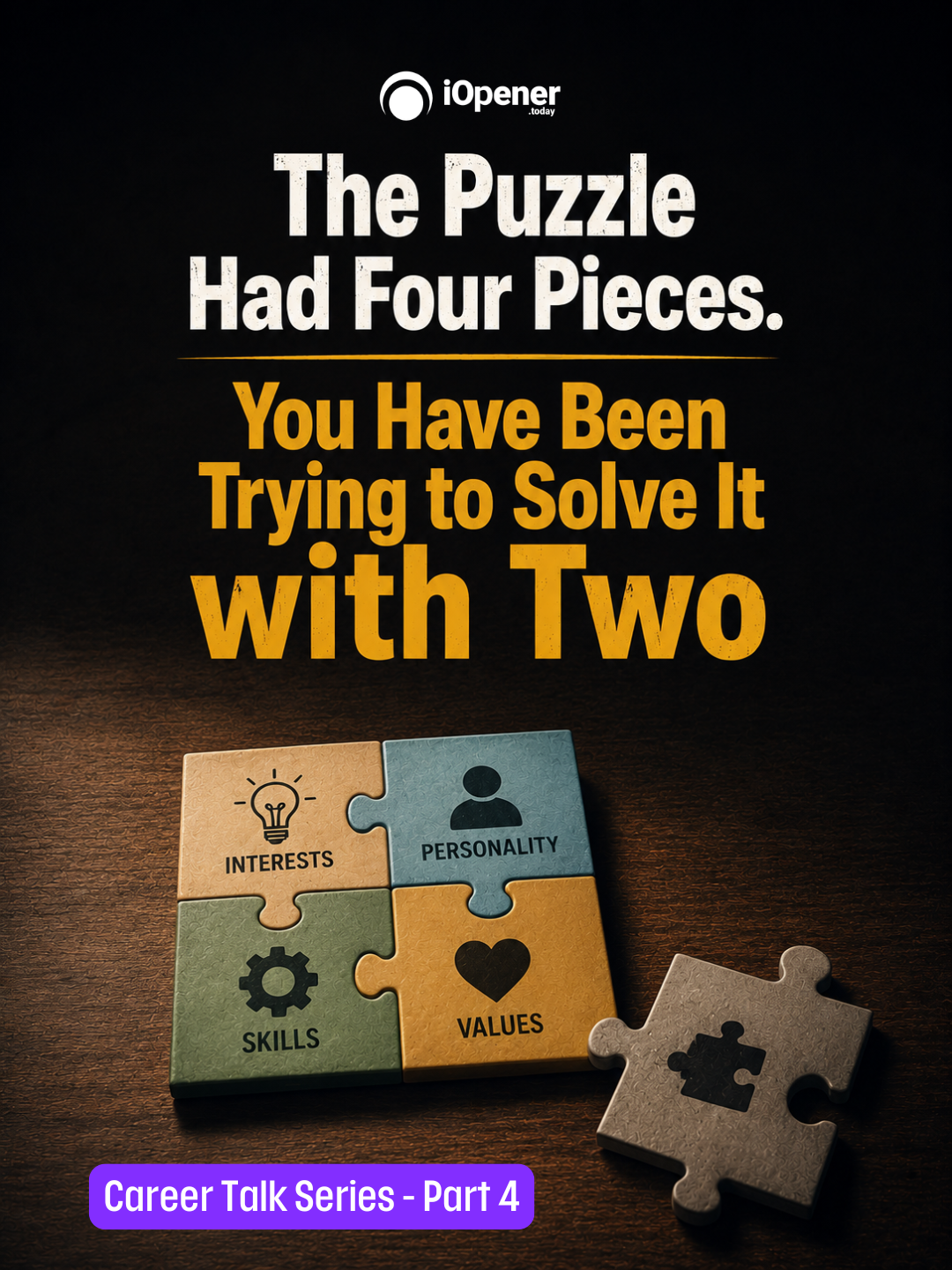
Finding your career fit is not a single revelation you have one afternoon. It is more like a puzzle with four pieces. Interests. Personality. Skills. Values. When all four overlap, that intersection is where your career fit lives. That is where work stops feeling like performance and starts feeling like expression.
In Part 2, we talked about your interests. The things you keep coming back to without being told to. In Part 3, we talked about personality. Not labels, but conditions. This week, we come to the piece most people think they understand, but usually do not.
Skills
That word sounds simple. Almost too simple. But skills are where a lot of people quietly underestimate themselves.
A student finishes Plus Two/PUC and suddenly every conversation around her starts sounding like an interview. “What course are you taking?” “That course has no future.” “You should choose something with scope.” “Don’t waste your marks.” At first, she tries to answer confidently. But after a while, something strange happens. She stops thinking about what she is naturally good at and starts thinking only about what sounds impressive enough to survive the conversation.
So, she opens YouTube. Searches “best courses after Plus Two.” Watches twenty different videos. Gets twenty different answers. And somehow ends up more confused than when she started. Because nobody is asking her the deeper question. Not “What course has scope?” But: What do you already do well without realizing it?
That is the real skills problem for most people. Not always weakness. Often blindness. That matters because skills are broader than most people think. A skill is not only what shows up on a certificate. It is also how you listen. How you organize. How you calm people down. How you explain something complicated. How you notice what others miss. How you keep things moving when everyone else is confused.
Some of the most valuable skills are quiet ones. You may not notice them because they feel too normal. But people come to you for a reason. When they need clarity. When they need a plan. When they need someone to fix the mess nobody else wants to touch. Those are not coincidences. Those are clues.
And this is where the career conversation gets sharper. Interests tell you where to look. Personality tells you how you work best. Skills tell you what you can actually offer. A person can love a field and still struggle in it if the work ignores their strengths. Someone may love media but not enjoy fast public-facing work. Someone may love helping people but not thrive in chaotic environments. Skills are part of the fit. They cannot be separated from the rest of the picture. All three matter.
And there is another thing young people need to hear. A lot of this generation is collecting information faster than ever, but not always building experience at the same speed. Courses, certificates, bootcamps, tutorials, workshops, reels, career advice, all of it is available. But knowing about a skill is not the same thing as practicing it. Reading about communication is not the same as navigating a difficult conversation. Watching a video on leadership is not the same as leading when it is inconvenient.
Skills are built by doing
Do not get trapped in the idea that more training will automatically produce clarity. Sometimes the thing standing between you and confidence is not another course. It is practice. Use what you already have. If you are good at listening, volunteer somewhere that needs it. If you are strong in writing, write for a real audience. If you are good with people, go serve people.
Skills become real when they are useful. Work becomes meaningful when your abilities connect to someone else’s need. That is when a skill stops being private and starts becoming impact.
So here is the practical step for this week:
Write down three things that people genuinely come to you for. Not what your degree says. Not what your resume lists. What do people actually trust you to do?
Maybe it is explaining.
Maybe it is encouraging.
Maybe it is editing.
Maybe it is planning.
Maybe it is calming things down.
Maybe it is solving problems.
Maybe it is researching.
Maybe it is leading.
Write those three things down.
Then choose one and put it to use in a real way this week. Not in theory. In life. Because that is where skills stop being vague and start becoming visible. And once you start seeing that clearly, the puzzle begins to feel less confusing.
Next week, we come to the quietest piece of all. Values. Because you can have the right interests, the right personality, and even the right skills, and still end up spending years in the wrong place if you have never stopped to ask what actually matters to you. And that conversation changes everything.



 Will a Robot Actually Take Your Job?