

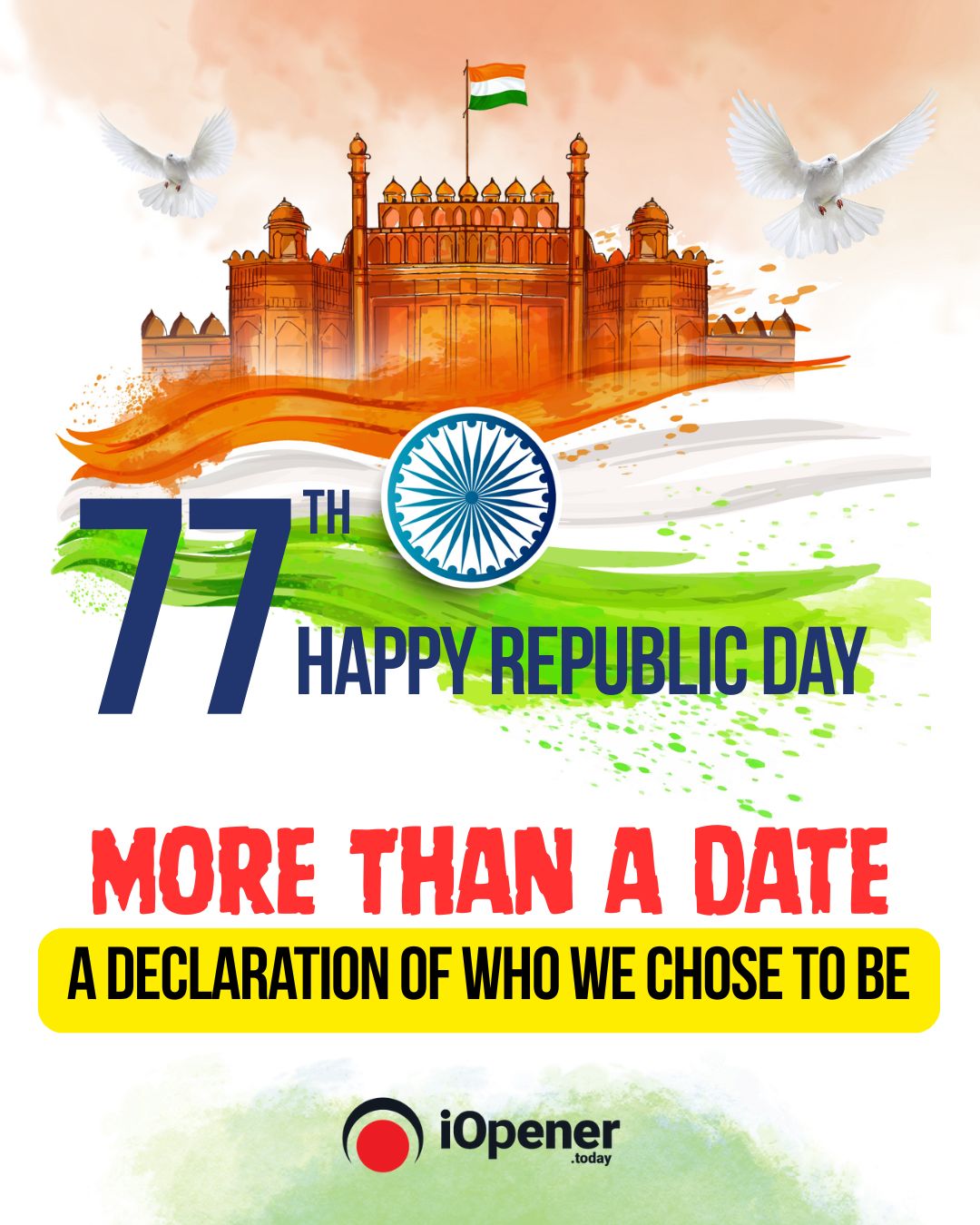
Why India Celebrates Republic Day on January 26? Every year on January 26, the tricolour rises across school grounds, society compounds, offices, and public squares in India. There are parades, patriotic songs, and proud speeches.
But Republic Day is not just about ceremony. It marks a deeply intentional moment in India’s story. It is a day chosen not by chance, but by conviction.
Independence Was Step One. A Republic Was the Promise.
India became independent on August 15, 1947. That day ended colonial rule. But independence alone did not define how India would govern itself.
For over two years after freedom, India functioned under temporary legal arrangements inherited from the British system. The real transformation came later when India chose to govern itself by a Constitution written by Indians, for Indians.
That moment arrived on January 26, 1950, when the Constitution of India came into force, officially turning the nation into a sovereign republic .
Why January 26? The Answer Lies in 1930.
The choice of January 26 goes back twenty years earlier, to a bold declaration made during the freedom struggle.
On January 26, 1930, the Indian National Congress proclaimed Purna Swaraj, meaning complete independence. It was not dominion status, not partial freedom, but full self-rule. The declaration was a turning point. It made clear that India would settle for nothing less than total freedom .
From that year onward, January 26 was observed as Independence Day by freedom fighters across the country, long before India actually became free.
When the Constitution was ready, the leaders of independent India deliberately chose January 26 to honour that earlier resolve. It was their way of saying: what we declared in hope, we now live in law .
What “Republic” Really Means?
A republic is not just a political label. It carries a powerful idea:
- Power does not rest with a king or ruler
- Authority does not come from inheritance
- The head of the nation is elected, not born
On Republic Day, India affirmed that the people are the ultimate source of power, and the Constitution is the highest authority.
Dr. B.R. Ambedkar and the Constituent Assembly crafted a document that guaranteed justice, liberty, equality, and fraternity. It was not just ideals on paper, but they were rights meant to be lived.
The Parade Is a Reminder, Not the Point
The Republic Day parade at Kartavya Path showcases military discipline, cultural diversity, and national strength. But the deeper reminder lies elsewhere.
Republic Day asks a quieter question of every citizen:
- Are we living by the values we celebrate?
- Do our daily choices reflect constitutional morality?
- Are we protecting unity while respecting diversity?
Republic Day in Today’s India
In a time of noise, division, and fast opinions, Republic Day invites pause. It reminds us that democracy is not sustained by flags alone, but by responsibility. That freedom is preserved not by slogans, but by integrity. And that the Republic survives only when citizens care enough to uphold it.
January 26 is not just about remembering history. It is about renewing a commitment. To the Constitution. To one another. To the idea of India.



 Love that Lasts