

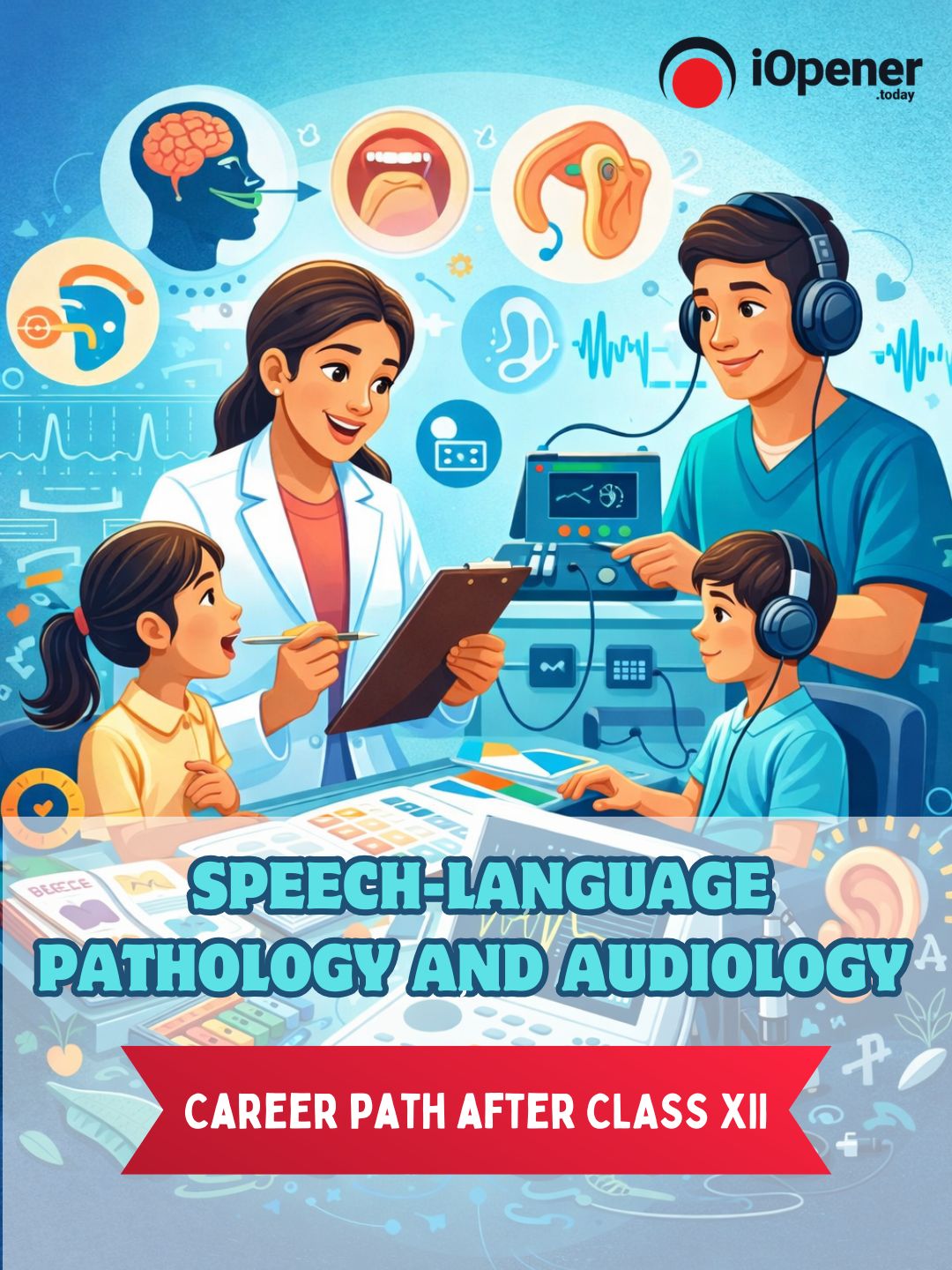
If you are interested in healthcare, communication, and making a meaningful difference in people’s lives, Speech-Language Pathology and Audiology (SLP & Audiology) offers a fulfilling career path after 12th. This field focuses on helping individuals overcome challenges related to speech, language, hearing, voice, and swallowing, across all age groups.
With increasing awareness about communication and hearing disorders, this profession has gained recognition as an essential part of healthcare and rehabilitation services.
What Is Speech-Language Pathology and Audiology?
Speech-Language Pathology deals with the assessment and management of speech, language, fluency, voice, and swallowing disorders. Audiology focuses on identifying, assessing, and managing hearing and balance disorders, as well as providing rehabilitative support.
Professionals in this field work closely with children, adults, and older individuals, often collaborating with doctors, psychologists, educators, and other healthcare professionals to improve quality of life.
Why Choose This Career After 12th?
- It combines science, healthcare, and human interaction
- It offers direct impact on individuals and families
- It provides opportunities across clinical, educational, research, and community settings
- It allows specialization based on interest, such as pediatrics, neurology, or hearing rehabilitation
For students who enjoy biology, communication, and working closely with people, this field offers both purpose and professional growth.
Eligibility After 12th
To pursue Speech-Language Pathology and Audiology, students generally need to complete 10+2 education, preferably from the Science stream. A background in Physics, Chemistry, and Biology is commonly required or preferred by most institutions.
Eligibility criteria may vary slightly between colleges, but a strong foundation in science is important for understanding human anatomy, physiology, and communication processes.
Courses Available After 12th
Diploma in Hearing, Language and Speech
This short-term program introduces students to the basics of speech and hearing disorders. It prepares them to work in supportive roles under qualified professionals in clinical or rehabilitation settings.
Bachelor of Science in Audiology and Speech-Language Pathology (BASLP)
BASLP is the primary undergraduate degree for those aiming to become qualified professionals in this field.
Duration: Typically 4 years, including a mandatory clinical internship
Course Focus:
- Anatomy and physiology of speech and hearing
- Speech and language development and disorders
- Audiology and hearing assessment
- Clinical training and hands-on therapy experience
This degree provides the foundation required for professional practice and further specialization.
Career Roles in Speech-Language Pathology and Audiology
Graduates in this field can pursue a variety of roles depending on their interests and training:
Speech-Language Pathologist (SLP)
Works with individuals to assess and treat speech, language, voice, fluency, and swallowing disorders, helping them communicate more effectively.
Audiologist
Specializes in identifying and managing hearing and balance disorders, and supporting individuals through hearing rehabilitation.
Pediatric Speech Therapist
Focuses on early intervention and therapy for infants and children with speech delays, developmental language disorders, and autism-related communication challenges.
Clinical Audiologist
Works in hospitals or clinics conducting hearing evaluations and planning rehabilitation strategies for individuals with hearing loss.
Hearing Aid Specialist
Supports individuals with hearing impairment by fitting and maintaining hearing aids and providing guidance on their effective use.
Rehabilitation Specialist
Works with individuals recovering from neurological conditions such as stroke, brain injury, or degenerative disorders to improve communication and swallowing abilities.
School-Based Speech-Language Pathologist
Supports students with communication and learning difficulties within educational settings, often working alongside teachers and special educators.
Early Intervention Therapist
Provides therapy to infants and toddlers with developmental delays, focusing on building foundational communication skills at an early age.
Voice and Fluency Specialist
Treats voice disorders and fluency issues such as stuttering, often working with professionals who rely heavily on vocal performance.
Speech-Language Pathologist in Special Needs Settings
Works with individuals with intellectual disabilities, multiple disabilities, or sensory impairments to improve functional communication.
Telepractice Clinician
Delivers speech and hearing services through online platforms, expanding access to therapy for individuals in remote or underserved areas.
Clinical Educator or Lecturer
Teaches and trains students in speech-language pathology and audiology while supervising clinical practice.
Researcher
Engages in academic or clinical research to advance knowledge in communication sciences, speech disorders, and hearing technology.
Private Practitioner or Clinic Owner
Runs an independent therapy or audiology practice, providing services while managing clinical and administrative responsibilities.
Work Settings
Professionals in this field may work in:
- Hospitals and rehabilitation centers
- Schools and special education institutions
- Private clinics and therapy centers
- Community health programs
- Research institutions and universities
- Telepractice and online therapy platforms
Skills That Support Success in This Field
- Strong communication and listening skills
- Empathy and patience
- Problem-solving and analytical thinking
- Ability to work with diverse age groups and needs
These skills are essential for building trust with clients and delivering effective therapy.
Conclusion
Speech-Language Pathology and Audiology is a meaningful and dynamic career option after 12th for students interested in healthcare, communication, and rehabilitation. With a wide range of roles, settings, and opportunities for specialization, this field allows professionals to make a lasting impact on individuals’ lives while growing academically and clinically.
Choosing this path is not just about a profession—it is about helping people find their voice, their hearing, and their connection to the world.


 Exploring Career Opportunities in Aerospace