

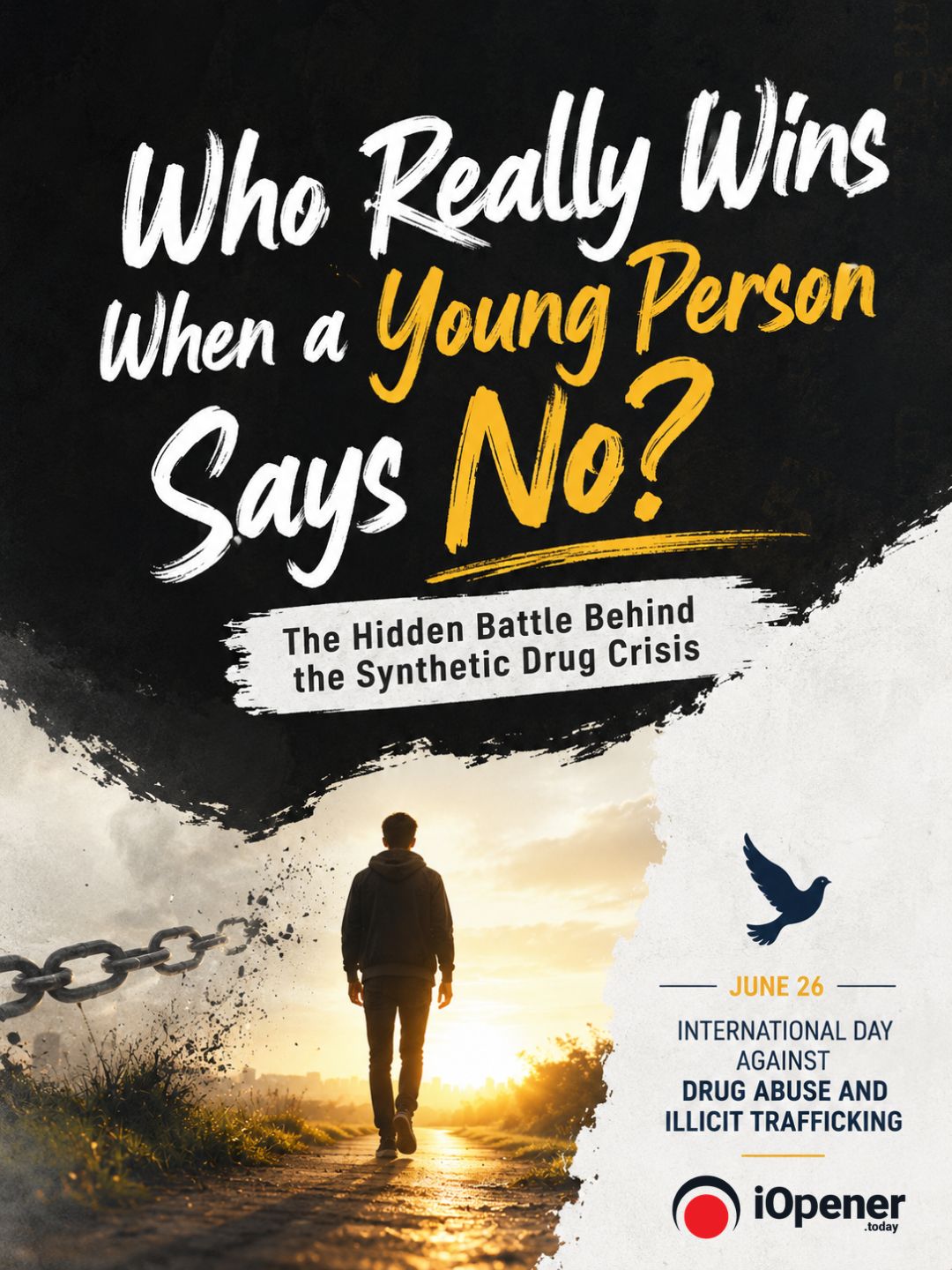
The synthetic drug crisis is one of the most urgent yet overlooked battles facing our world today. It is not confined to criminal networks or law enforcement agencies alone. It is a crisis that is quietly reshaping families, communities, and the lives of countless young people.
Every year on 26 June, the world observes the International Day Against Drug Abuse and Illicit Trafficking. Across the globe, governments release reports on drug seizures, law enforcement agencies announce successful raids, and international organisations renew their commitment to combating the illegal drug trade. These victories deserve recognition. Every shipment intercepted prevents untold harm, and every trafficking network dismantled makes communities safer.
Yet an important question often remains unasked.
Why does the drug trade continue to thrive despite decades of enforcement?
The answer lies beyond border checkpoints and courtrooms. The real battle often begins much earlier in school corridors, college hostels, neighbourhoods, homes, and sometimes in the quiet loneliness of a young person’s bedroom. Long before drugs are sold, hope is often stolen.
The Drug Trade Is Built on Human Brokenness
One of the greatest misconceptions about the drug trade is that it is fundamentally about chemicals. Drug cartels certainly manufacture and distribute narcotics, but they do not manufacture the conditions that make people vulnerable to addiction. They do not create loneliness, anxiety, rejection, depression, family conflict, trauma, or the deep desire to belong. Those realities already exist within society. What organized crime has learned to do remarkably well is profit from them.
Every generation has searched for ways to escape pain. Some seek success, believing achievement will silence insecurity. Others pursue entertainment, relationships, or endless distractions. Increasingly, however, many are offered another escape through synthetic drugs. And these are substances that promise confidence, relief, acceptance, or temporary peace.
The tragedy is that most young people are not searching for drugs. They are searching for something the drugs promise to provide.
Why Synthetic Drugs Are Changing the Landscape
Synthetic drugs have transformed the economics of the illegal drug trade. Unlike many traditional narcotics, they can often be manufactured quickly in laboratories, transported discreetly, and sold at relatively low cost. Their accessibility has expanded dramatically, reaching cities, campuses, and communities with alarming speed.
But their greatest danger is not simply their potency. It is the illusion they create. For someone carrying emotional pain, a pill can appear to be a solution. For someone struggling with anxiety, it can look like confidence. For someone overwhelmed by loneliness, it can feel like belonging.
What begins as an escape gradually becomes a prison.
Every Young Person Who Says “No” Changes the Equation
When a young person refuses drugs, we often celebrate it as a personal victory. It certainly is. But it is also something much larger. The drug trade survives because there is demand. Every person who refuses addiction weakens that demand. Every life restored represents one fewer customer sustaining an industry built on human brokenness.
This reminds us that the fight against drugs cannot be won by reducing supply alone. Law enforcement plays an indispensable role. Every successful investigation, every confiscated shipment, and every trafficker brought to justice protects communities. But policing cannot eliminate loneliness. It cannot arrest hopelessness. It cannot confiscate despair. Those are battles that society must fight together.
The Addiction Beneath the Addiction
Perhaps our understanding of addiction needs to become deeper. Addiction is rarely only about the substance. More often, the substance becomes a coping mechanism for wounds that have never healed.
Behind many addictions is a story that few people see: a young man exhausted by the pressure to succeed, a student overwhelmed by repeated failure, a teenager carrying childhood trauma, or someone quietly convinced that life no longer has meaning. When those deeper wounds remain unaddressed, simply removing the substance rarely brings lasting freedom.
This is why prevention must be about more than warning people about drugs. It must also be about helping people discover hope before addiction appears to offer it.
Communities Are the First Line of Prevention
The strongest defence against addiction is not fear but rather it is belonging. Young people who experience healthy relationships, meaningful friendships, wise mentors, and supportive families are far less likely to seek counterfeit versions of those things elsewhere.
This is where every member of society has a role to play. Parents build resilience by creating homes where difficult conversations are welcomed rather than avoided. Teachers often become the first adults to notice behavioural changes that others miss. Friends can recognise warning signs long before professionals become involved. Counsellors, healthcare workers, volunteers, mentors, and community leaders provide safe spaces where asking for help is seen as courage rather than weakness.
None of these interventions may attract headlines. Yet together they quietly weaken the business model of organized crime.
The Freedom Every Human Heart Is Looking For
The Bible presents a remarkably honest picture of the human condition. It recognises that people hunger and thirst, not merely for food or water but for acceptance, identity, forgiveness, purpose, and hope.
Whenever those deeper longings remain unmet, people naturally search elsewhere. The danger is not that we search. The danger is where we choose to look. Every addictive substance begins with a promise. It promises confidence, relief and escape.
But addiction has never been interested in setting people free. It slowly exchanges freedom for dependence, control for bondage, and hope for despair.
Jesus offered a completely different understanding of freedom. When he said, “If the Son sets you free, you will be free indeed” (The Bible), he meant more. He was speaking about more than freedom from destructive habits. He was speaking about freedom from shame, guilt, fear, and the brokenness that often drives people toward addiction in the first place.
And this good news invites them into a new identity, a restored relationship with God, and a hope strong enough to replace what addiction could never truly satisfy.
So, Who Really Wins?
When a young person says “no” to drugs, the victory extends far beyond that individual. Perhaps the greatest victories against the drug trade will never appear on the front page of a newspaper. They happen quietly when a parent chooses to listen instead of lecture, when a teacher notices a struggling student, when a friend refuses to walk away or when someone discovers that lasting hope can never be found inside a pill.
As we observe the International Day Against Drug Abuse and Illicit Trafficking, let us continue supporting stronger laws, effective policing, quality education, rehabilitation, and accessible mental health care. But let us also remember that every restored relationship, every act of compassion, every honest conversation, and every young person who discovers genuine hope contributes to another quiet victory.
In the end, that may be the most powerful way to weaken the drug trade. Every life transformed is one less customer. Every heart restored is one less opportunity for exploitation. And every person who discovers true freedom reminds us that while drugs may promise escape, only hope has the power to make people truly free.


 STAY : Why the Hardest Conversation Is the One Worth Starting